
About 20 million people in the US have a dust mite allergy, but how much do you know about them? If you associate dust mites with dirty homes, visible dust, or a particular time of year, you're not alone. These microscopic creatures have become the subject of plenty of household myths—and some of them can make it harder to manage dust mite allergies effectively.
Dust mites are common indoor allergens that can live in bedding, carpets, upholstered furniture, and other fabric-heavy areas of the home. For people who are sensitive to them, exposure can contribute to sneezing, congestion, itchy or watery eyes, coughing, and asthma symptoms.
So, what's actually true? Here are five common dust mite myths worth clearing up.
Myth #1: Dust mites only live in dirty homes
The truth: Dust mites can live in almost any home.
It's easy to assume that finding dust mites means your home isn't clean enough. But dust mites aren't necessarily a sign of poor housekeeping.
These microscopic organisms feed primarily on shed skin cells and thrive in warm, humid environments. They commonly make their homes in mattresses, pillows, carpets, rugs, upholstered furniture, and stuffed toys—places where fabric and moisture provide favorable conditions. Some of these locations are difficult to clean in the first place, and it doesn't help that dust mites don't like leaving where they settle either.
That means even a spotless home can have dust mites. Cleaning can help reduce dust and allergens, but you can't completely eliminate them simply by keeping your home tidy.
Myth #2: Dust mites are only a problem during allergy season
The truth: Dust mite allergies can occur year-round.
Unlike pollen, which tends to follow seasonal patterns, dust mites are indoor allergens. They can be present throughout the year, particularly in homes where temperature and humidity allow them to thrive.
However, you might notice your symptoms getting worse at certain times of year. If your reaction gets more severe during pollen allergy season, it may be a good idea to shorten your time outside. Spending more time indoors, closing windows, and using indoor heating can all change your exposure to indoor allergens.
So if your sneezing or congestion seems to disappear during pollen season but returns when you're spending more time inside, dust mites could be one possible culprit.
Myth #3: If you can't see dust mites, they aren't there
The truth: They're microscopic. That's the point.
Dust mites are so small that you can't see them with the naked eye. They are related to spiders and ticks and typically live deep within household fabrics rather than sitting visibly on top of surfaces.
And there's another important distinction: dust itself isn't the same thing as a dust mite.
The allergic reaction is primarily caused by proteins found in dust mite waste and other mite particles. These allergens can become part of household dust and can be disturbed into the air, where they're easier to inhale.
This is also why you can experience symptoms even when your home looks clean.
Myth #4: Dusting and vacuuming will get rid of dust mite allergies
The truth: Cleaning helps, but it isn't a complete solution.
Regular cleaning is still an important part of reducing indoor allergens. Washing bedding, vacuuming carpets, and reducing dust buildup can all help manage exposure.
But cleaning isn't necessarily the same as eliminating the allergens that trigger your symptoms.
In fact, dusting, sweeping, and vacuuming can temporarily stir particles into the air, which may make symptoms worse for some people during or immediately after cleaning.
While there isn't a one and done solution, there's a reason why dust mite management generally works best as a combination of strategies. Washing bedding regularly, controlling indoor humidity, using allergen-barrier bedding covers, and treating allergy symptoms when necessary can all play a role. By covering all your areas of exposure to dust mites as well as your reaction to them, you'll lower your chances of triggering symptoms.
Myth #5: Dust mites only live in your bed
The truth: Your bedroom may be a hotspot, but it's not the only one.
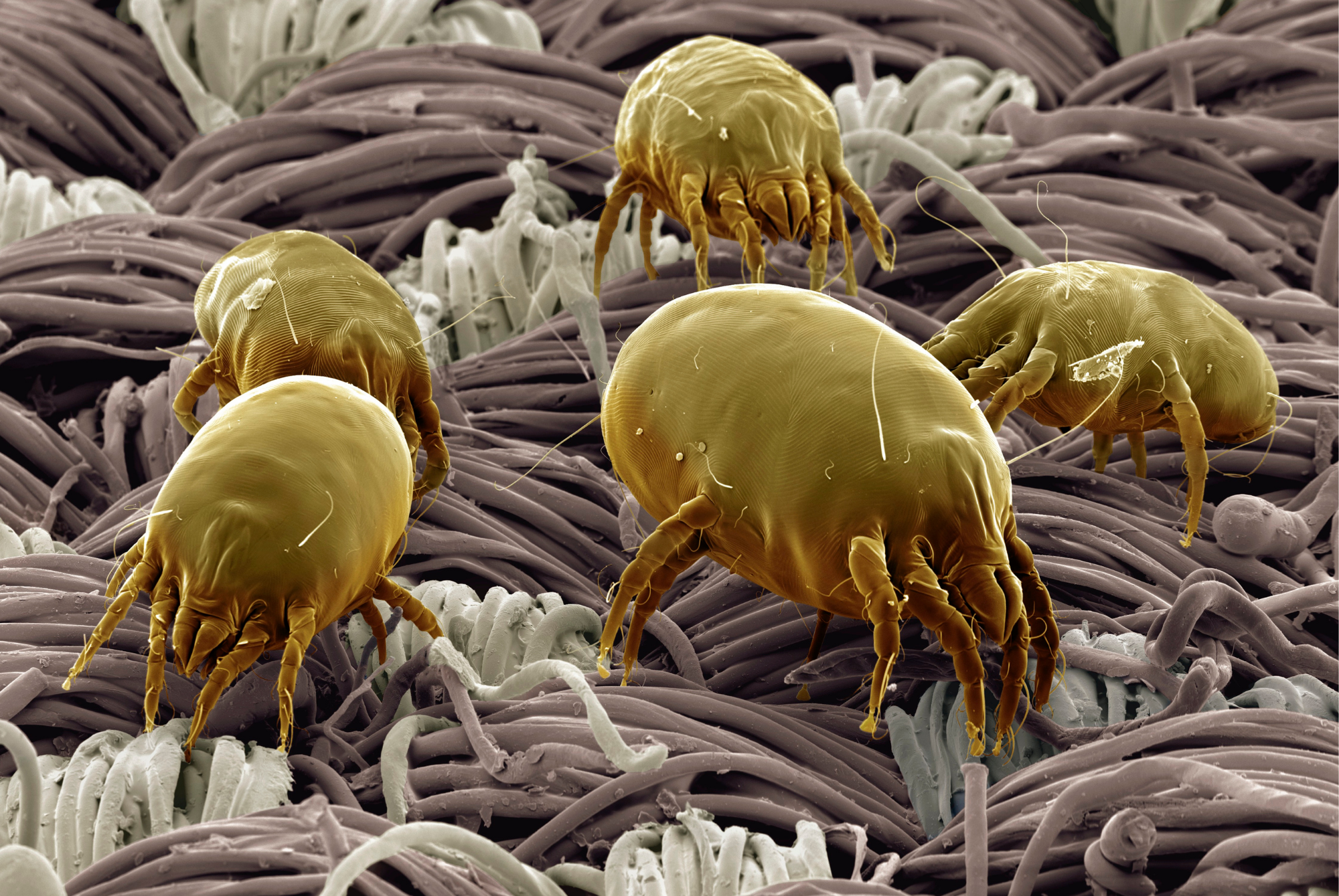
Beds are particularly attractive environments for dust mites because they provide warmth, moisture, and a steady supply of shed skin cells. But they're not confined to your mattress.
Dust mites can also live in:
- Carpets and rugs
- Couches and upholstered chairs
- Curtains
- Pillows and blankets
- Stuffed animals
- Other fabric-covered items
This is one reason focusing exclusively on your mattress may not be enough if you're experiencing dust mite allergy symptoms throughout your home.
The Bottom Line
Dust mites are nearly invisible, incredibly common, and not necessarily a reflection of how clean your home is. While you can't completely eliminate them, you can reduce your exposure.
Start with the basics: wash bedding regularly, keep indoor humidity below 50% when possible, clean carpets and upholstered surfaces, and consider allergen-barrier covers for mattresses and pillows. If symptoms continue despite environmental changes, an allergist can help determine whether dust mites are actually triggering your symptoms and discuss appropriate treatment options.
The biggest myth to leave behind? A clean-looking home isn't necessarily an allergen-free home.