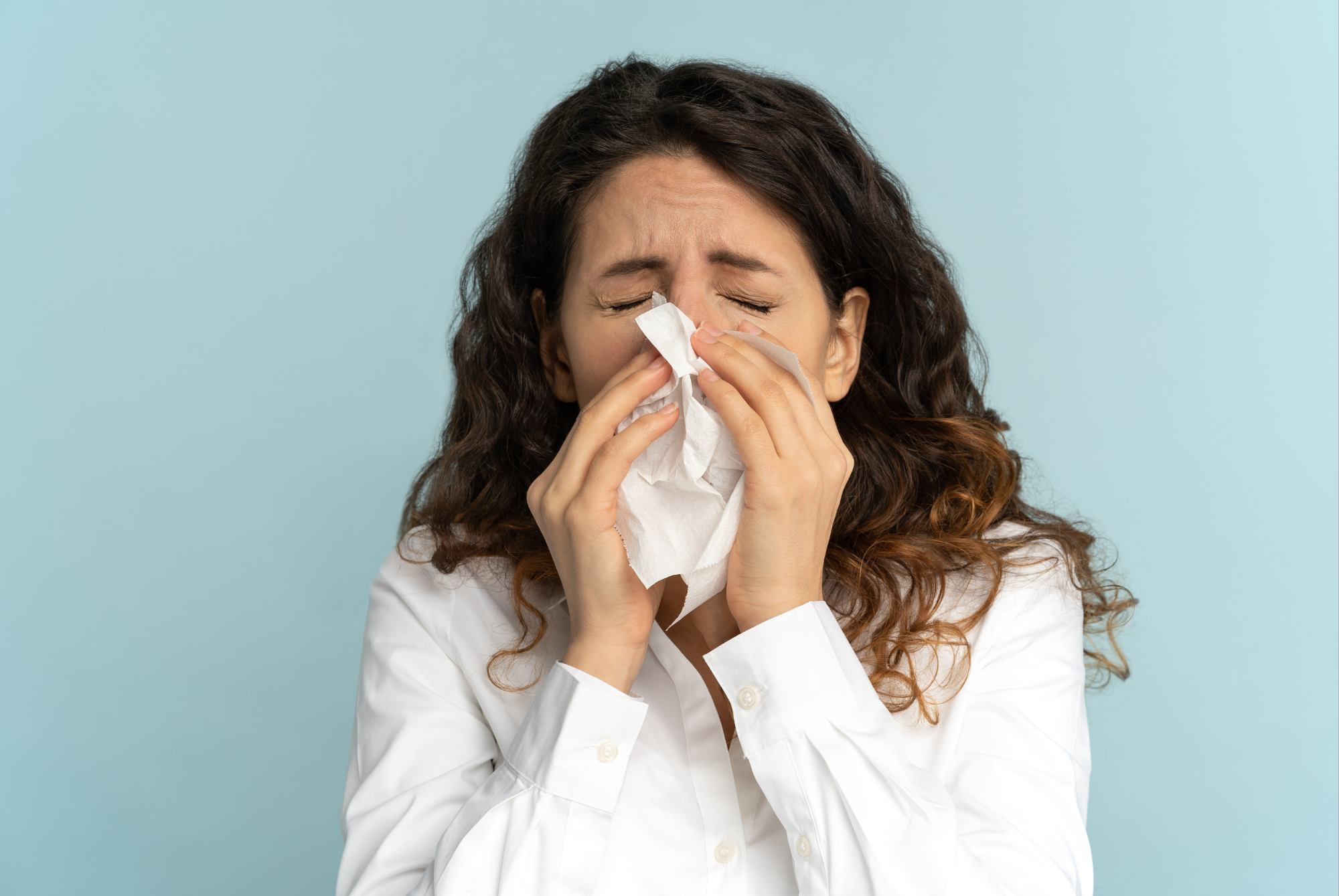
If you deal with allergies regularly, it can be easy to think of your symptoms as something you simply have to live with.
A stuffy nose in the morning. A cough that never quite goes away. Itchy eyes. Constant sneezing. Maybe some wheezing when your allergies are particularly bad.
But what happens when your body is exposed to an allergen over and over again?
While allergies don't automatically cause serious disease, ongoing exposure can keep your body's inflammatory response switched on. For people with allergies, this can contribute to persistent symptoms and may increase the risk or severity of certain respiratory and inflammatory conditions.
And when the allergen is something that's difficult to escape—like dust mites, mold, or pet dander—that exposure can happen every day.
Let's take a closer look.
Why Prolonged Allergen Exposure Matters
An allergy occurs when the immune system mistakes a normally harmless substance for a threat.
When someone with an allergy encounters their trigger, the immune system can release inflammatory chemicals such as histamine, cytokines, and leukotrienes. These chemicals are responsible for many familiar allergy symptoms, including congestion, itching, sneezing, watery eyes, and airway irritation.
The problem isn't necessarily one exposure.
It's repeated exposure.
If you're continually encountering the same allergen, your nose, sinuses, skin, or airways may continue experiencing inflammation. For someone with perennial allergies—such as allergies to dust mites or pet allergens—that can mean symptoms persist throughout the year rather than disappearing when a particular allergy season ends.
So, what conditions can prolonged or poorly controlled allergies be connected to?
1. Asthma
One of the biggest concerns is asthma.
Asthma is a chronic disease in which the airways become inflamed and overly reactive. Allergens such as dust mites, mold, pollen, and animal allergens can trigger asthma symptoms, including coughing, wheezing, chest tightness, and shortness of breath.
For people who already have asthma, uncontrolled allergies can make things more difficult.
Allergic inflammation in the upper airways and asthma in the lungs are closely connected. In fact, allergic rhinitis is associated with an increased risk of asthma, and allergy triggers can provoke asthma attacks in sensitive individuals.
Heavy or prolonged allergen exposure may also contribute to ongoing airway inflammation. BJC notes that people with heavy or prolonged allergen exposure can develop chronic inflammation that may diminish healthy lung function.
The takeaway: If your allergies regularly come with coughing, wheezing, or shortness of breath, don't assume you're simply dealing with "bad allergies." Those symptoms can overlap with asthma and deserve medical attention.

2. Chronic Sinusitis
Ever feel like your sinuses are permanently blocked?
Allergies could be part of the reason.
Allergic rhinitis causes inflammation and swelling inside the nasal passages. When this swelling interferes with normal drainage, mucus can become trapped in the sinuses. Over time, this can contribute to recurring or chronic sinus problems.
People with allergic rhinitis or asthma are more likely to experience chronic sinusitis, which is generally defined as sinus symptoms lasting 12 weeks or longer despite treatment.
That doesn't mean allergies directly cause every sinus infection. Viruses, bacteria, nasal polyps, structural issues, and other factors can also play a role.
But if you're constantly congested because of allergies, your sinuses may have a harder time draining normally.
Signs to watch for include:
- Persistent nasal congestion
- Facial pressure or pain
- Postnasal drip
- Thick nasal discharge
- Headaches
- Chronic cough
- Reduced sense of smell
If these symptoms keep coming back, it's worth talking with a healthcare provider rather than assuming they're just part of having allergies.
3. Nasal Polyps
Chronic inflammation can affect more than your ability to breathe comfortably.
Nasal polyps are soft growths that develop in the lining of the nasal passages and sinuses. They typically develop when that tissue has been inflamed for an extended period—often 12 weeks or longer.
Nasal polyps are associated with conditions including allergic rhinitis, chronic rhinosinusitis, and asthma.
Larger polyps can block the nasal passages, making congestion worse and potentially contributing to frequent sinus infections or a reduced sense of smell.
It's another example of why chronic nasal symptoms shouldn't necessarily be dismissed as "just allergies."
4. Recurrent Ear Problems
Your nose and ears are more connected than you might think.
The inflammation and congestion caused by allergic rhinitis can affect the passages that help regulate pressure and fluid around the middle ear.
As a result, uncontrolled nasal allergies can be associated with ear problems and recurrent ear infections, particularly in children.
For children especially, persistent congestion can become more than an annoyance. Poorly controlled allergic rhinitis has also been associated with disrupted sleep, fatigue, and problems with school performance.
5. Sleep Problems and Chronic Fatigue
Not every consequence of prolonged allergen exposure looks like a disease.
Sometimes, it simply makes you feel terrible.
Constant congestion can make it harder to breathe comfortably at night. Sneezing, coughing, itching, and postnasal drip can also interrupt sleep.
And when this happens night after night, the effects can add up.
Allergic rhinitis has been associated with altered sleep patterns, fatigue, irritability, and reduced quality of life.
This can create a frustrating cycle:
Allergen exposure → inflammation → congestion → poor sleep → daytime fatigue.
You might think you're tired because you're busy, stressed, or simply not sleeping enough. But if you're waking up congested every morning, your allergies could be contributing.

Does Prolonged Exposure Mean You'll Develop a Disease?
Not necessarily.
This is an important distinction.
Being exposed to dust mites, pollen, mold, or pet allergens doesn't mean you're destined to develop asthma, chronic sinusitis, or another condition.
Your genetics, existing health conditions, the severity of your allergies, and the amount and duration of exposure can all influence what happens. Some people may experience relatively mild symptoms despite regular exposure, while others develop significant inflammation and complications.
The bigger concern is persistent, uncontrolled symptoms.
If your body is reacting to an allergen every day, it's worth finding out what's triggering the reaction and figuring out how to manage it.
What Can You Do About Long-Term Allergen Exposure?
The goal isn't necessarily to create a completely allergen-free environment. That's nearly impossible.
Instead, think about reducing your overall exposure.
For indoor allergies, that might mean:
- Washing bedding regularly
- Using allergen-proof mattress and pillow covers
- Keeping indoor humidity under control
- Using a HEPA-filtered vacuum or air purifier
- Reducing dust-collecting carpets and heavy fabrics
- Addressing visible mold and moisture
- Keeping pets away from areas where you sleep if they're a trigger
- Identifying your specific allergens through appropriate allergy testing
For people with persistent symptoms, medications or allergy immunotherapy may also be options. An allergist can help identify specific triggers and develop a treatment plan based on your symptoms.
The Bottom Line
Allergies might seem like a minor inconvenience, especially when you've gotten used to sneezing every morning or reaching for tissues throughout the day.
But constant exposure isn't something you necessarily have to accept as normal.
Repeated allergen exposure can contribute to ongoing inflammation and is associated with conditions such as asthma, chronic sinusitis, nasal polyps, and ear problems. It can also interfere with sleep, energy levels, and everyday quality of life.
If your allergy symptoms are persistent, getting worse, interfering with sleep, or accompanied by wheezing or difficulty breathing, it's worth speaking with a healthcare professional.
Because sometimes the biggest problem with allergies isn't the occasional sneeze.
It's what happens when your body never gets a break.