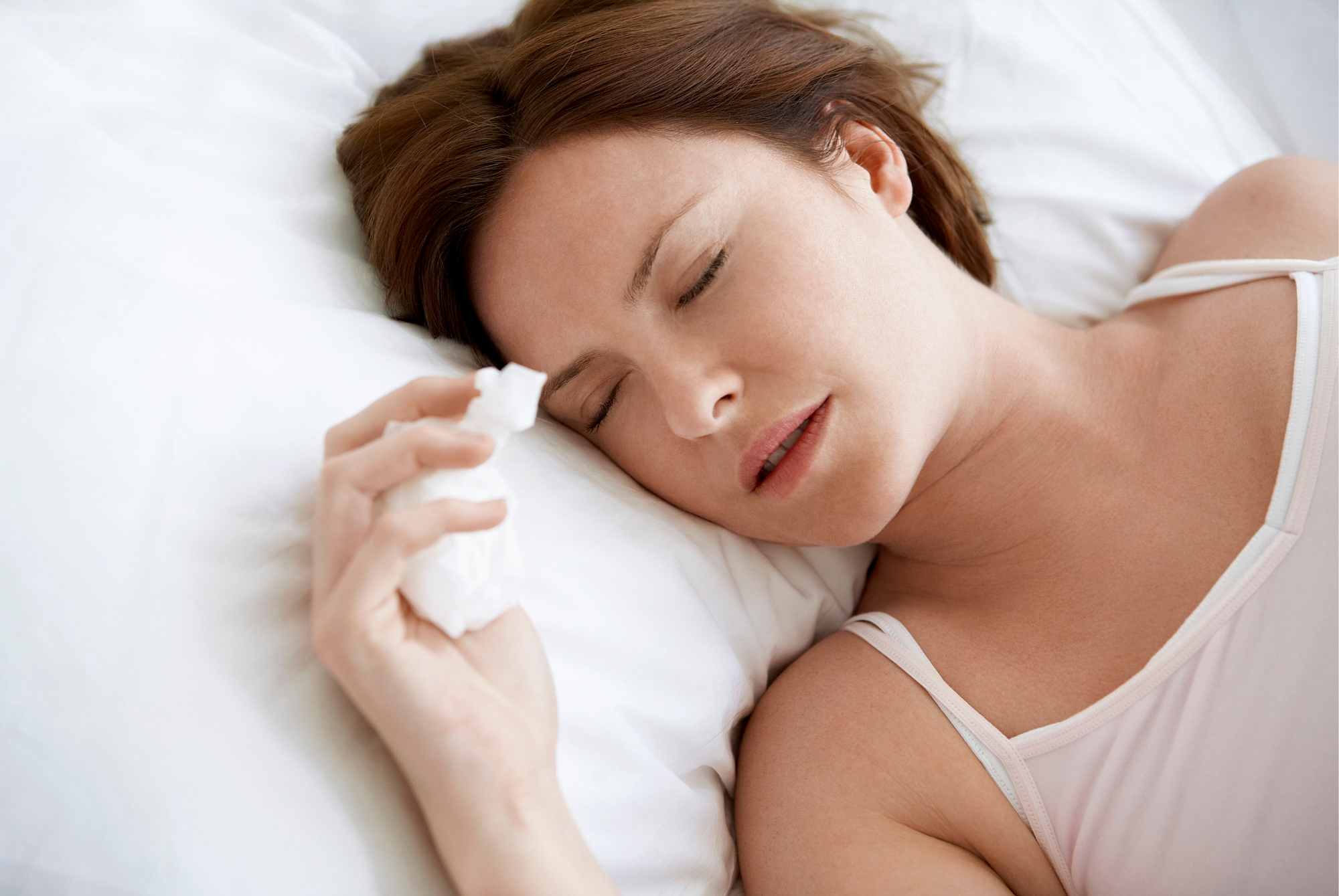
You get into bed feeling fine. Then, within an hour, your nose is completely blocked, your eyes are itchy, and you're suddenly sneezing nonstop.
If you have a pet allergy, you may have noticed that your symptoms seem to get worse at night. But does your pet actually produce more allergens after dark?
Not exactly.
Pet allergens don't follow a bedtime schedule. Instead, several factors can make your exposure—and your symptoms—more noticeable at night. From allergens collecting in your bedroom to spending hours in the same environment, nighttime creates the perfect conditions for an allergy flare-up.
Let's break down what's actually happening.
What Causes Pet Allergy Symptoms?
Before getting into why symptoms can feel worse at night, it's important to understand what you're reacting to in the first place.
Contrary to popular belief, pet allergies aren't caused by fur itself.
The main culprits are proteins found in a pet's dander, saliva, urine, and skin secretions. In cats, the primary allergen is Fel d 1, while dogs produce several allergens including Can f 1 and Can f 2.
When a cat or dog grooms itself, allergens from saliva and skin secretions can spread onto its fur. From there, they can become airborne or settle onto household surfaces—including furniture, clothing, carpets, and bedding.
For someone who is allergic, the immune system mistakenly treats these otherwise harmless proteins as a threat. This triggers an inflammatory response that can cause sneezing, congestion, itchy or watery eyes, coughing, and other symptoms.
So why does all of this seem to get worse once you're trying to sleep?
Why Are Pet Allergies Worse at Night?
1. Your Bedroom May Have More Allergens Than You Think
Your bedroom might look clean, but that doesn't necessarily mean it's low in allergens.
Pet allergens are extremely small and can accumulate on soft surfaces such as:
- Mattresses
- Pillows
- Blankets
- Carpets
- Curtains
- Upholstered furniture
- Clothing
Cat allergens in particular are known to be persistent and can remain on surfaces long after the cat has left the area.
If your pet regularly spends time in your bedroom, those allergens can gradually build up.
And unlike the rest of your home, you may spend eight consecutive hours sleeping in the same room.
2. You're Exposed for Much Longer
During the day, you're constantly changing environments.
You might spend time in the kitchen, leave for work, go outside, or visit other places. Your exposure to allergens is therefore broken up throughout the day.
At night, that changes.
You may spend several uninterrupted hours in one room surrounded by the same bedding, furniture, carpeting, and air.
That doesn't necessarily mean the allergen concentration suddenly increased. It means your continuous exposure has increased.
For someone with an allergy, that distinction matters.
3. Lying Down Can Make Congestion More Noticeable
There is also a physical reason nighttime symptoms can feel worse.
When you're lying down, mucus doesn't drain as easily as it does when you're upright. If your nasal passages are already inflamed from an allergic reaction, congestion can become more noticeable once you get into bed.
This can create the familiar nighttime cycle:
allergen exposure → inflammation → congestion → lying down → congestion feels worse
And suddenly, falling asleep becomes much harder.
4. Your Bedding Can Trap Pet Allergens
Your bed is essentially a large collection of fabric.
Sheets, blankets, pillows, and mattresses can all collect particles over time. If your pet sleeps on the bed—or regularly jumps on it—those surfaces can become another source of exposure.
This is particularly relevant for people with cat allergies because Fel d 1 is small, sticky, and capable of spreading throughout indoor environments.
Your cat doesn't have to be curled up beside you for the allergen to still be present.
Does Sleeping With Your Pet Make Allergies Worse?
Potentially, yes.
Allowing a pet to sleep on your bed gives allergens a direct route onto the surfaces you're in contact with for hours.
This doesn't mean that every person with a pet allergy needs to completely separate themselves from their animal. But if your symptoms consistently flare up at bedtime, your bedroom is one of the first places worth examining.
Creating a lower-allergen sleeping environment can give you several hours each night with less exposure.

What About the Pet Being in Another Room?
This is where things get complicated.
Simply moving your pet out of the bedroom doesn't instantly remove the allergens that are already there.
Pet allergens can spread through the home and accumulate on furniture, clothing, flooring, and other surfaces. Cat allergens are particularly persistent and have been detected in environments where cats aren't directly present.
So if your cat sleeps in the living room but your bedroom is covered in allergen-containing dust, keeping the cat outside your bedroom may not be enough on its own.
The goal isn't simply to remove the pet. It's to reduce the amount of allergen you're exposed to.
How Can You Reduce Pet Allergens at Night?
If nighttime is when your symptoms are at their worst, start with your sleeping environment.
Keep Your Bedroom Pet-Free
If possible, don't allow your pet to sleep on your bed or spend extended periods in your bedroom.
This won't remove allergens that are already present, but it can help prevent additional accumulation.
Wash Your Bedding Regularly
Wash sheets, pillowcases, blankets, and other washable bedding regularly.
If your pet has been sleeping on your bed, cleaning your bedding becomes especially important.
Vacuum and Clean Soft Surfaces
Carpets, rugs, upholstered furniture, and curtains can all collect allergens.
Regular cleaning can help reduce the amount of allergen sitting around your bedroom. A HEPA-filtered vacuum can also be useful for capturing small airborne particles.
Consider a HEPA Air Purifier
Airborne allergens are another part of the equation.
A properly sized HEPA air purifier can help filter particles from the air in your bedroom. It shouldn't be considered a complete solution, but it can be one part of a broader allergen-management strategy.
Address the Allergen, Not Just the Symptoms
Antihistamines and other allergy medications can help control symptoms, but they don't remove the allergens you're reacting to.
That's why environmental control matters.
Reducing allergen accumulation through cleaning, filtration, and limiting exposure can complement symptom-focused treatments.
What If Your Allergies Are Still Worse at Night?
Don't automatically assume your pet is the only explanation.
Bedrooms can contain several potential allergy triggers, including dust mites, mold, and pet allergens. Dust mites are particularly relevant because they commonly live in mattresses, pillows, carpets, and upholstered furniture—the exact places where you spend your nights.
It's also possible to have more than one allergy.
If your symptoms consistently occur at night but don't seem to improve after reducing pet exposure, it may be worth discussing allergy testing with a healthcare professional.
And if your nighttime symptoms include wheezing, chest tightness, or difficulty breathing, speak with a healthcare professional rather than assuming it's simply a minor pet allergy.
The Bottom Line
Pet allergies don't suddenly become stronger when the sun goes down.
Instead, nighttime can bring together several factors that make your symptoms more noticeable: prolonged exposure, allergen-filled bedding and furniture, spending hours in one room, and lying down while your nasal passages are already inflamed.
If your allergies seem to come alive the moment your head hits the pillow, start with your bedroom.
Keep pets off the bed, wash bedding regularly, clean soft surfaces, and consider HEPA filtration. And remember that removing your pet from the room isn't the same thing as removing the allergens.
Sometimes, the problem isn't what happens at night. It's everything that has accumulated there during the day.